
Chinese Artwork
Mandarin Students have been exploring Chinese Artwork, and the philosophical undertones to pieces of art.
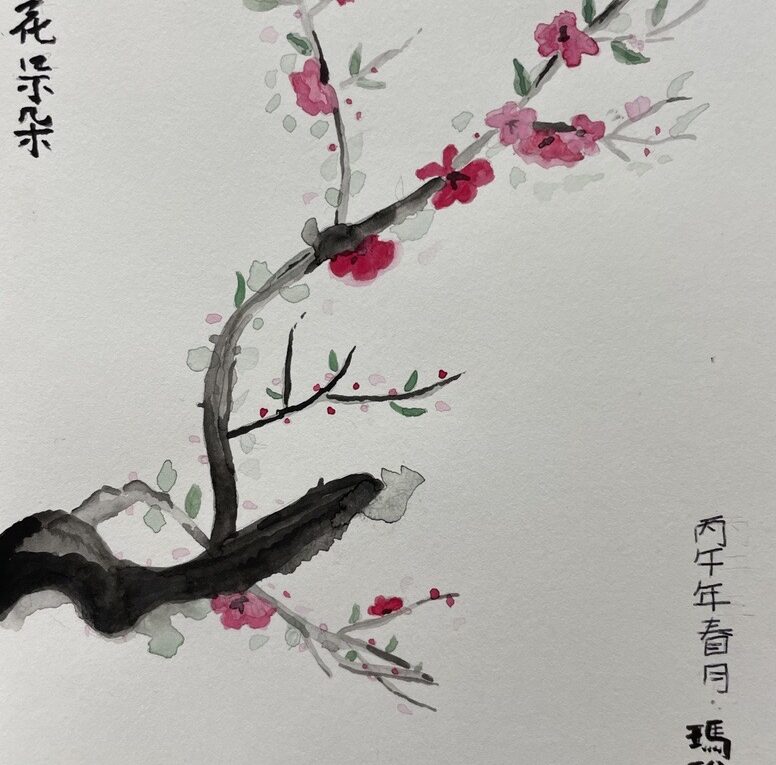
“琴棋书画”历来被视为中国古代文人修身养性的必修课。本学期末,我们欣赏并尝试翻译了几首描写春天的唐诗,如孟浩然的《春晓》:“春眠不觉晓,处处闻啼鸟。夜来风雨声,花落知多少。”在春期假前的最后一课,9—12年级的同学们用水墨作画,体会诗与画交融的美感。
中国画已有三千多年的历史,重在表现事物的神韵,而不仅追求形似。它通过墨色深浅的变化和自然流畅的笔触,将诗、书、画融为一体,并巧妙运用留白,营造宁静而开阔的意境。通过山水、花鸟、人物等题材的创作与欣赏,同学们不仅领略到中国画独特的艺术魅力,更深刻体会到其中蕴含的天人合一的哲思与情感。
“Qin, chess, calligraphy, and painting” were traditionally regarded as essential disciplines for cultivating character and refinement among ancient Chinese scholars. This term, we appreciated and attempted to translate several Tang poems about spring, such as Meng Haoran’s Spring Dawn: “Spring sleep—unaware of morning’s light, Everywhere I hear birds in flight. Last night came the sound of wind and rain. How many blossoms have fallen again?” In our final lesson before the Spring holiday, students in Year 9–12 created ink wash paintings, experiencing firsthand the beauty that emerges when poetry and painting intertwine.
With a history spanning more than three thousand years, Chinese painting emphasises capturing the spirit and essence of its subjects rather than merely achieving physical resemblance. Through variations in ink tones and naturally flowing brushstrokes, it integrates poetry, calligraphy, and painting into a unified art form. The skilful use of empty space further creates a sense of tranquillity and expansiveness. By exploring themes such as landscapes, flowers and birds, and figures, students not only discovered the unique artistic charm of Chinese painting but also gained a deeper appreciation of the philosophy and emotions it embodies—particularly the ideal of harmony between humanity and nature.
