Year of the Horse
Ms Bishop explores the culture and language of China in the Year of the Horse 2026.

According to the lunar calendar, we enter the Year of the Horse on February 17th, 2026. The date marks Lunar New Year.
Celebrations of the Lunar New Year extend across East and Southeast Asia. In Korea, it is a major national holiday marked by ancestral rites and family reunions, while Vietnam observes Tết, which shares parallels with the Chinese Spring Festival while retaining distinct local traditions.
In Singapore, the Lunar New Year is an official public holiday widely celebrated by the Chinese diaspora within a multicultural society. By contrast, Japan adopted the Gregorian calendar in 1873, and the Lunar New Year is no longer a national holiday, though some lunisolar traditions persist.
Spring Festival
Celebrated from the first day of the first lunar month, the Spring Festival is regarded as the most important festival of the year in Chinese culture. During the festival, people hold family reunions and honour their ancestors. The lion dance is performed in public and red envelopes of money are placed in the lion’s mouth for good luck. It is traditional for grandparents to give their grandchildren red envelopes with money inside: this is called ya sui qian. These days the envelopes are just as likely to have cartoon characters on them as traditional symbols.
xí sú yǔ chuán tǒng
习俗与传统 Customs and Traditions

Y12 玛雅
春节有很多的习俗:比如你家里的老人会用红包包压岁钱送给你,你们跟你的家人一起吃年夜饭,一起放烟花,放爆竹、包饺子和吃饺子等等。中国新年很好玩!在春节,你可以对彼此说“新年快乐”和”恭喜发财”。
There are many traditions during the Spring Festival. For example, elders in the family give red envelopes with lucky money inside. Families eat a New Year’s Eve dinner together, set off fireworks and firecrackers, make dumplings, and eat dumplings. The Chinese New Year is a lot of fun! During the Spring Festival, people say “Happy New Year” and “May you be prosperous” to each other.
xīn nián hè cí
新年贺词 New Year Greetings
xīn nián kuài lè
新年快乐
Happy New Year
gōng xǐ fā cái
恭喜发财
Wishing you prosperity
shí èr shēng xiào
十二生肖 Zodiac
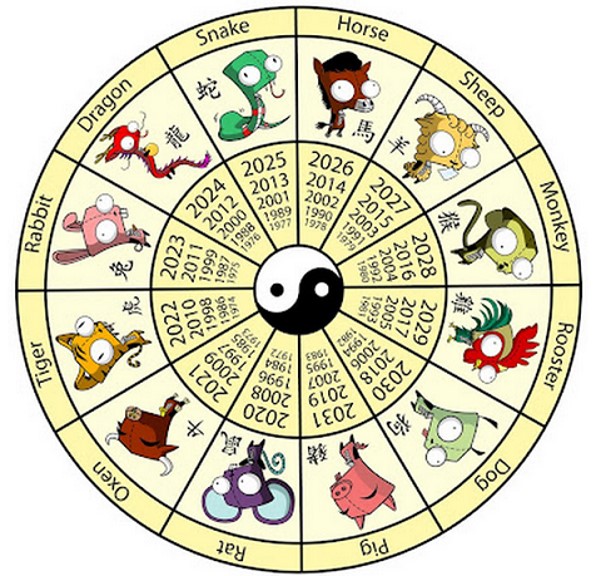
The date of Chinese New Year changes from year to year. It corresponds to the new moon (black moon) in either late January or February. Traditionally, celebrations last for fifteen days, ending on the date of the full moon.
In China the public holiday lasts for seven days. The Chinese calendar is made up of a cycle of twelve years, each of them being named after an animal. This is very like our signs of the zodiac.
nián yè fàn yǔ yù yì
年夜饭与寓意 New Year Foods & Their Symbolism
蛋糕 (dàn gāo – Cake) – Growth & progress
桔子 (jú zi – Tangerines) – Good luck & wealth
鱼 (yú – Fish) – Abundance & surplus
面条 (miàn tiáo – Noodles) – Longevity
饺子 (jiǎo zi – Dumplings) – Wealth & prosperity
烤鸡 (kǎo jī – Roast Chicken) – Family unity
年糕 (nián gāo – Sticky Rice Cake) – Success
菊花茶 (jú huā chá – Chrysanthemum Tea) – Health & longevity
Chinese New Year dishes symbolise good luck, wealth, happiness, and family unity for the coming year.

yuán xiāo jié
元宵节 The Lantern Festival

The celebrations end on the fifteenth day with ‘The Festival of Lanterns’. Everywhere is decorated with lanterns of different sizes and in the streets, there is music and dancing.
The making of lanterns in China is a tradition which goes back 500 years.
In Taiwan, Korea, Singapore, Malaysia, Vietnam, and Thailand, the Lantern Festival is celebrated with vibrant lantern displays, dragon or lion dances, and traditional foods such as 汤圆 tangyuan or sweet rice dumplings. Major Chinatowns across the United States, Canada, Australia, and the RHS Wisley Garden in the UK also host spectacular lantern festivals featuring parades, cultural performances, and festive exhibitions.
fú
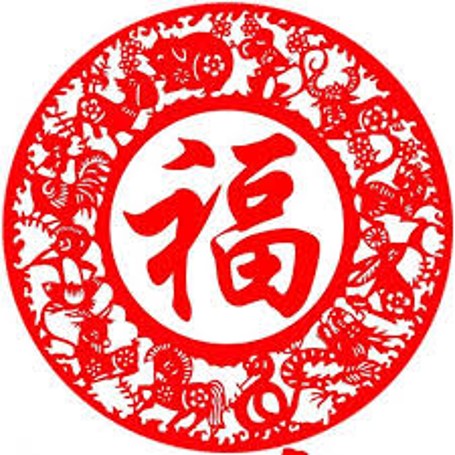
“福“ New Year Decorations: Good Luck Couplets
- “福” means good fortune, happiness, and blessings, and is displayed to welcome luck for the new year.
- Spring couplets (春联) are poetic phrases on red paper placed beside doors to express good wishes and hopes for prosperity, health, and peace in the coming year.