
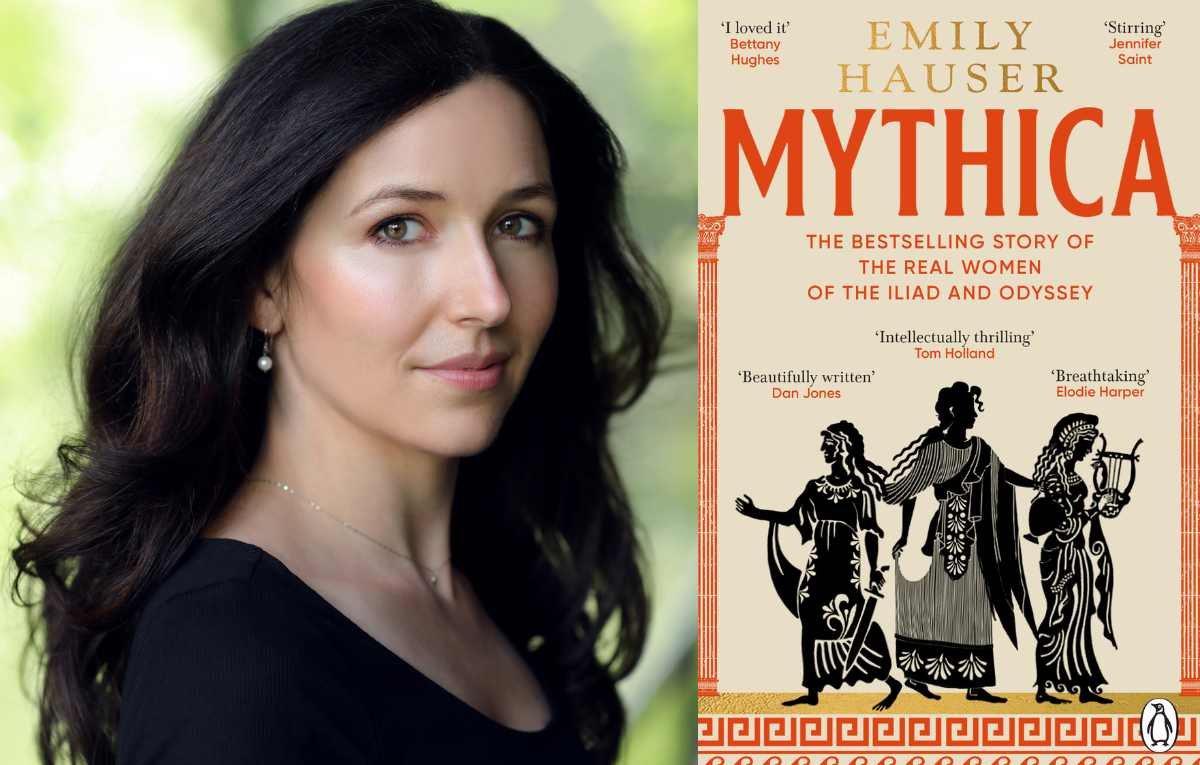
Shining a light on the Shunned Women in Classical Antiquity : Emily Hauser
Lily (Y11) explores how subtle changes in grammar can shift perspective.
Whilst there are many trailblazing women in classics whose work could be explored in depth, someone I find particularly inspiring, especially after hearing her talk at school, is Emily Hauser. Having studied Classics at Yale, Harvard (as a Fulbright Scholar) and Cambridge, she takes a specific interest in discovering and acknowledging the role of women in classical antiquity. Several of her books are retellings of well-known epics and myths (e.g. ‘The Iliad’, Jason and the Argonauts’ journey) in the perspective of the much less mentioned, but still crucially important, female characters, such as Atalanta.
In her talk at Wimbledon High, she brought light to the derogatory attitudes towards women that are portrayed by Homer in ‘The Odyssey’ and ‘The Iliad’, reflecting the huge gender imbalances at the time, and recognised specific women (such as Briseis) for their contributions to the epics, believing that these epics couldn’t exist without the presence of women.
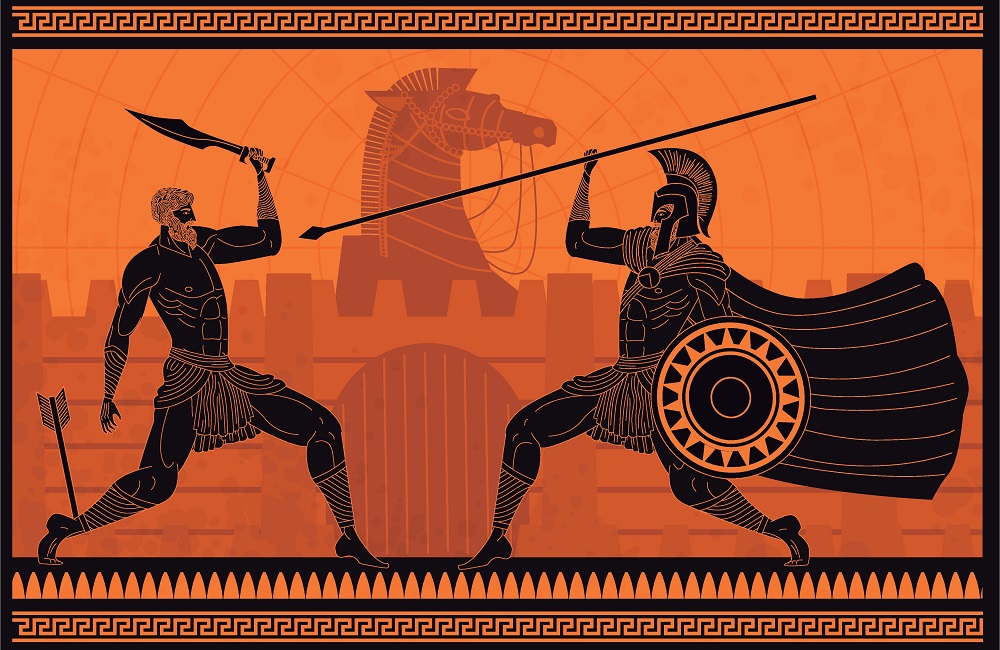
For example, Emily talked about how the first line in both the Iliad and ‘The Odyssey’ involves the male poet/narrator (Homer) asking a muse (who would be a woman) to tell a story of a man, and how this was something very much seen in ancient times. The first line of ‘The Odyssey’ is as follows:
‘ἄνδρα μοι ἔννεπε, μοῦσα, πολύτροπον, ὃς μάλα πολλὰ’
With Robert Fagles’ translation being: “Sing to me of the man, Muse, the man of twists and turns-”.
Important to note: Robert Fagles has chosen a stylistic translation, meaning that some words are not translated directly – e.g. ‘ὃς’ meaning ‘who’ has not been directly translated and ‘μάλα πολλὰ’ meaning ‘very many’ has likely been combined with ‘πολύτροπον’ meaning ‘of many ways’ to form the translation of ‘of twists and turns’.
As Emily pointed out, the fact that ‘ἄνδρα’, meaning ‘man’, has been promoted by Homer to the start of the sentence, even though it is in the accusative case (meaning it would typically come later), emphasises the instant male focus of this epic, despite the fact that Penelope (Odysseus’ loyal wife) is the main object of Odysseus’ desire to return home and is depicted a fair amount in the epic to face struggles herself in dealing with suitors and maintaining her household. Emily argued that Odysseus’ 10-year journey home would not be nearly as important if Penelope did not exist, proving her importance as a female character to the epic.
Additionally, there are other major female characters involved in the epic, such as Calypso and Circe, who detain Odysseus for seven years and one year respectively, and Athena who appears throughout many of the books.
Like in the analysis above, in her talk Emily Hauser pointed out the androcentric nature of ‘The Odyssey’ right from the beginning (and the same goes for ‘The Iliad’), bringing attention to the fundamental importance of the female characters in strengthening the plot line and Odysseus’ motives.
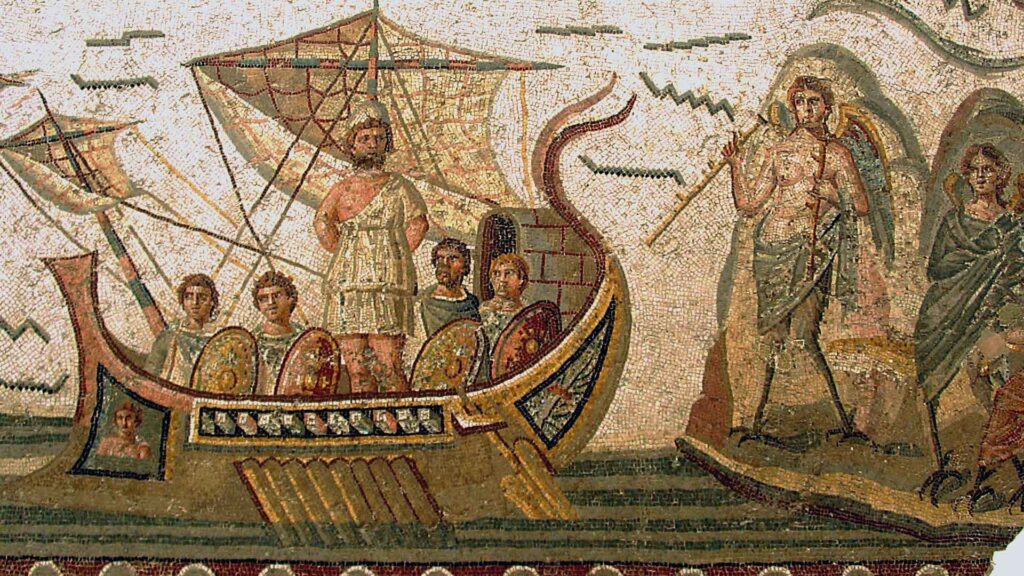
Fun fact: the word androcentric comes partly from the Ancient Greek word ἀνδρός, which is the genitive form of the masculine noun ἀνήρ (meaning ‘man’) and so means ‘of man’, linking to the definition of androcentric – focused or centered on men.
Emily Hauser is currently a Lecturer of Classics, Ancient History, Religion and Theology at the University of Exeter and continues to write fiction and non-fiction books, having recently released a book (April 2025) entitled ‘Mythica: A New History of Homer’s World, Through the Women Written Out of It’, which was an instant Times bestseller.